Group Size and Hunter to Guide Ratio
One of the most crucial, yet often overlooked, aspects of booking a guided hunting trip in Alberta is understanding the dynamic between group size and the hunter-to-guide ratio. Many hunters step into an outfitted experience without fully grasping how these elements will profoundly shape their time in the field, leading to anything from minor frustrations to significant dissatisfaction. This guide will help you decipher these factors so you can make an informed decision and ensure your next Alberta hunting adventure meets your expectations.
Understanding the Hunter-to-Guide Ratio
When you're looking at booking a guided hunt, whether for a big bull moose in the boreal forest or a trophy whitetail in the parkland, you'll often see numbers like "1:1" or "2:1" thrown around. These aren't just arbitrary figures; they are fundamental to how your hunt will operate and the level of personalized attention you can expect. Grasping what these ratios truly mean is the first step in planning a successful trip.
What Does "Hunter-to-Guide Ratio" Actually Mean?
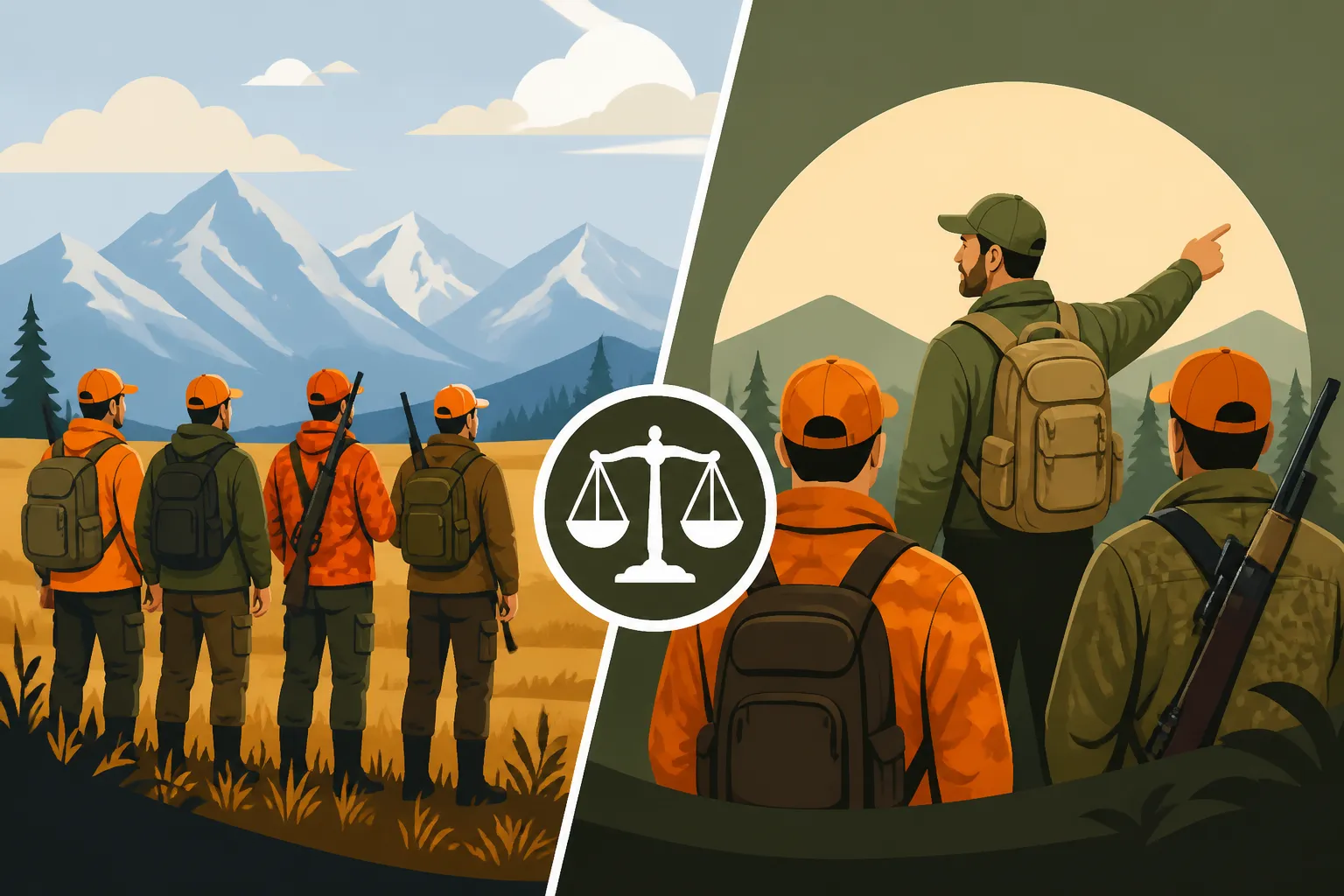
At its simplest, the hunter-to-guide ratio describes how many hunters are assigned to a single professional guide. A 1:1 ratio means you, the hunter, have a dedicated guide solely focused on your hunt. This is often considered the gold standard for intensive, personalized experiences. On the other hand, a 2:1 ratio means two hunters share one guide. You might also encounter 3:1 or even higher ratios, especially for certain types of hunts or larger group bookings. It's a direct indicator of the guide's attention being split or singularly focused, which has ripple effects across the entire hunting process.
Think about it this way: imagine learning to drive. Having an instructor sitting right beside you, giving you immediate, one-on-one feedback, is a much different experience than being one of three students in a single car, all trying to learn from the same instructor. The same principle applies here. Your guide is your instructor, your scout, and your tracker all rolled into one. The more hunters they have to manage, the less concentrated their effort can be on any single individual's needs or preferences.
Why This Ratio Matters for Your Hunt
The chosen hunter-to-guide ratio directly influences several critical aspects of your hunt: safety, opportunity, and instruction. With a 1:1 ratio, your guide can focus entirely on your safety in potentially dangerous terrain or while handling firearms, ensuring every step is secure. They can also dedicate their full attention to spotting game for you, judging trophy quality specifically for your tag, and making quick, decisive plans based on your pace and shooting ability. This singular focus often translates to more direct opportunities and a higher likelihood of success, especially for challenging species or in difficult conditions.
Conversely, a 2:1 or higher ratio means a guide must constantly balance the needs and movements of multiple hunters. If one hunter is slower, the other might be held back. If two hunters spot different animals, the guide has to decide which opportunity to pursue, or how to split their attention. This can create scenarios where compromises are necessary, potentially reducing shot opportunities for individual hunters or making the experience feel less tailored. For instance, in a 2:1 deer hunt, if two bucks are spotted, which hunter gets the first shot, or will the guide try to get both set up simultaneously, potentially rushing the process? These are real considerations that can impact the emotional and practical outcome of your hunt.
Common Ratios and Their Implications
Let's break down the most common ratios you'll encounter when booking an Alberta guided hunt:
-
1:1 Hunter-to-Guide Ratio: This is the premium experience. Your guide is dedicated solely to you. This means maximum flexibility in terms of where you hunt, how long you stay out, and what specific animals you pursue. If you want to sit in a stand all day, they're with you. If you want to spot-and-stalk for Mule Deer Hunting Alberta's Prairie and Badlands for hours, they're focused on your stalk. This ratio is ideal for hunters targeting specific trophy animals, those with physical limitations requiring extra support, or anyone who simply prefers an intensely personal experience. It's often standard for high-dollar hunts like Booking an Alberta Bighorn Sheep Hunt or hunts in remote, challenging terrain where safety and precision are paramount. While typically more expensive, many find the unparalleled attention and customizability well worth the investment.
-
2:1 Hunter-to-Guide Ratio: This is arguably the most common ratio for many big game hunts, especially for species like whitetail, mule deer, elk, and bear. It's a popular choice for hunting partners, friends, or family members who want to hunt together. With two hunters, the cost is often more palatable than a 1:1 arrangement, and you still get a significant amount of attention from your guide. The challenge here is coordination; both hunters need to be on a similar page regarding pace, physical ability, and what they're hoping to achieve. The guide will have to manage two sets of eyes, two sets of movements, and potentially two different shot opportunities. It's a good balance of cost and service, but requires a degree of cooperation between the two hunters. For example, Hunting Elk on Alberta Grain Land might involve two hunters strategically positioned by a guide along a field edge, and the guide must coordinate their movements and shots to maximize success for both.
-
3:1 Hunter-to-Guide Ratio (or higher): While less common for dedicated big game hunts, ratios of 3:1 or even 4:1 can be found, particularly for larger group trips, general plains game hunting in other regions, or even some Waterfowl Hunting Alberta's Grain Fields operations where a single guide might set decoys and manage calling for a blind of several hunters. For big game, this typically means a more independent hunt for each individual, with the guide acting more as an overseer, offering general direction or assistance rather than constant, personalized attention. This can work well for experienced hunters who are confident in their own abilities and enjoy the camaraderie of a larger group, and it's generally the most budget-friendly option. However, it also means that the guide's time and resources are spread thin, and the chances of a truly tailored experience diminish significantly.
The Impact of Group Size on Your Hunting Experience
Beyond just the hunter-to-guide ratio, the overall size of your hunting party – whether it's just you, you and a buddy, or a larger assembly of friends – can dramatically alter the dynamics of your trip. It's not just about who's sharing the guide, but who's sharing the camp, the truck, and the experience as a whole. Each configuration offers its own set of advantages and challenges that are worth considering well before you book your adventure.
Small Group Advantages: Personalized Attention and Flexibility
Hunting as a single individual or with one trusted partner (a small group of 1-2 hunters) offers unparalleled benefits in terms of personalized attention and flexibility. When it's just you and your guide (a 1:1 ratio), the hunt becomes entirely about your goals and preferences. If you want to spend extra time scouting a particular Hunting a Foothills Bench Above a Creek for elk sign or waiting out a whitetail in a specific Hunting a Cutline Intersection for Whitetails, your guide's schedule revolves around you. There’s no need to compromise on tactics, pace, or even lunch breaks. This focused approach means the guide can truly understand your shooting style, physical condition, and what you consider a successful hunt, tailoring every aspect to your needs.
Similarly, a pair of hunters operating on a 2:1 ratio can still enjoy a great deal of customization. If you and your hunting buddy have similar interests, physical capabilities, and a shared vision for the hunt, you can be incredibly efficient. Your guide can work with both of you to maximize opportunities. For example, if you're Spot-and-Stalk Mule Deer in Alberta, the guide can position both of you for a shot, or coordinate a plan where one hunter approaches from one angle while the other holds back. This close-knit dynamic often leads to deeper friendships, shared memories, and a more intimate connection with the hunting experience. Many hunters prefer this setup for the balance of companionship and focused effort.
Larger Group Dynamics: Social Aspects and Logistical Challenges
On the flip side, larger groups, say 3-4 hunters or more, even if split across multiple guides (e.g., two 2:1 groups or one 1:1 and one 2:1), bring a different set of dynamics. The biggest advantage of a larger group is often the social aspect. Sharing stories around the campfire, celebrating successes together, and enduring challenges as a team can be incredibly rewarding. These trips can become memorable bonding experiences, perfect for family reunions or long-standing friend groups. The collective energy and camaraderie can elevate the entire experience beyond just the hunt itself.
However, larger groups introduce significant logistical challenges. Coordinating multiple hunters' schedules, preferences, and physical abilities can be a constant balancing act for the outfitter and guides. Travel to and from hunting areas might require multiple vehicles. Stalking quietly in a group larger than two or three hunters becomes exponentially harder. Moreover, the increased human presence can impact game movement, making animals warier. Imagine trying to get five hunters quietly into position for Calling Moose in Alberta's Boreal Forest—it's incredibly tough. Outfitters often have specific areas or properties better suited to larger groups, or they might split the group to hunt different locations simultaneously, which means less direct interaction with everyone during the day.
Balancing Companionship and Opportunity
Ultimately, the choice of group size often boils down to a personal balance between the desire for companionship and the pursuit of optimal hunting opportunity. If your primary goal is to spend quality time with friends or family, sharing the experience and making memories, then a larger group might be perfect for you, even if it means fewer personalized shot opportunities. The joy of the shared adventure outweighs the intensity of the individual hunt. You'll want to ensure the outfitter is experienced in managing larger parties and has the infrastructure to support it, from adequate vehicles to sufficient camp space.
If, however, your focus is squarely on maximizing your chances of tagging a specific animal or immersing yourself completely in the hunting process with minimal distractions, then a smaller group or even a solo 1:1 hunt will likely serve you better. This allows the guide to devote all their energy to your success, adapting tactics on the fly based on your performance and the game's behavior. Platforms like BookYourHunt often allow you to see reviews and details about an outfitter's typical group sizes, which can give you a feel for their operational style. It's about aligning your expectations with the realities of the group size you choose.
Choosing the Right Setup for Your Alberta Adventure
Deciding on the perfect hunter-to-guide ratio and group size isn't a one-size-fits-all answer. It truly depends on your individual preferences, what you're hunting, and what kind of experience you envision for your Alberta adventure. Taking the time to honestly assess these factors will go a long way in ensuring your guided hunt is everything you hope for.
Assessing Your Personal Hunting Style and Goals
Before you even start looking at outfitters, sit down and think about your own hunting style and what you genuinely want out of this trip. Are you a social hunter who thrives on camaraderie, sharing stories, and experiencing the outdoors with others? Or are you a solitary type, preferring quiet concentration and a deep immersion in the pursuit? Your personality plays a huge role here. If you're an introverted hunter who values solitude, a large group might feel overwhelming. Conversely, if you love sharing every moment, a 1:1 hunt might feel too isolated.
Consider your physical conditioning and hunting goals, too. Are you looking for a physically demanding mountain hunt, perhaps Backpack Hunting Into Alberta Sheep Country, where every ounce of the guide's attention will be crucial for navigation and safety? Or is it a more relaxed deer hunt in agricultural fields, where the primary goal is a mature whitetail and a good time with friends? Your desired trophy level also matters. If you're chasing a Boone and Crockett class animal, the precision and dedication of a 1:1 guide who can judge a buck at distance and get you into the perfect shooting lane is invaluable. If your goal is simply to fill a general season tag and enjoy the scenery, a 2:1 or even slightly higher ratio might be perfectly fine.
How Different Species Influence Ideal Ratios
The species you're pursuing in Alberta often dictates the practicalities of hunter-to-guide ratios. Some animals and hunting methods are inherently better suited to certain group sizes.
-
Mountain Species (Bighorn Sheep, Mountain Goat): For Bighorn Sheep in Alberta's Mountains or Mountain Goat Numbers and Where They Live, a 1:1 ratio is almost always recommended, if not mandatory. These hunts are physically brutal, often in remote, unforgiving terrain. The guide needs to focus entirely on your safety, your stamina, and spotting those incredibly camouflaged animals on distant ridges. A second hunter could compromise safety or greatly reduce the chances of a successful stalk.
-
Elk and Moose: For larger big game like Moose Across Alberta's Boreal and Foothills or Elk in Alberta's Mountains and Farmland, 1:1 or 2:1 are common. Calling operations, like Bugling Elk in Alberta's Foothills or Calling a Bull Moose in the Rut, benefit from fewer people to keep noise and movement to a minimum. A 2:1 hunt can work well if both hunters are equally quiet and disciplined, allowing the guide to set up two shooters. However, anything larger becomes very challenging for a successful call-in.
-
Deer (Whitetail, Mule Deer): These are often where 2:1 ratios truly shine, offering a good balance for many hunters. Whether you're hunting a Willow Run in Farm Country or glassing Reading Whitetail Sign in Alberta Aspen Bluffs, a guide can effectively manage two hunters. For example, setting two hunters in different stands along a pinch point, or working a field edge for mule deer. If your objective is a truly exceptional, specific buck, then a 1:1 might give you that extra edge.
-
Bear (Black Bear): Many Black Bear Hunting in Alberta operations, especially those using bait, can handle 2:1 or even 3:1 in certain situations, particularly if hunters are positioned in separate stands over different baits. The guide often checks baits, drives hunters to stands, and then picks them up. The actual hunt over bait is typically solitary.
-
Waterfowl and Upland Birds: For Waterfowl Hunting Alberta's Grain Fields or Upland Bird Hunting in Alberta, higher ratios like 3:1 or 4:1 are quite common and can be very effective. A single guide can manage a goose spread for several hunters, call birds, and retrieve downed game. Similarly, for walking up upland birds, a guide might manage dogs and direct a small group of shooters. The social aspect of these hunts is often a huge draw, and the higher ratio usually doesn't detract from opportunity as much as it might for a solo big game stalk.
Questions to Ask Your Outfitter About Group Sizes and Ratios
Once you have an idea of your preferences, it's time to talk specifics with potential outfitters. Don't be shy about asking direct questions—a good outfitter will be transparent and happy to discuss their operational style. Websites like GoHunt can provide initial information, but a direct conversation is always best.
Here's a table of crucial questions to ask:
| Question | Why It Matters |
|---|---|
| What is your standard hunter-to-guide ratio? | Establishes the baseline for attention you can expect. |
| Can I request a 1:1 ratio, and what's the cost? | Gives you options if you want a more dedicated experience. |
| How large are your typical hunting parties/groups in camp? | Helps you understand the overall social environment and logistics. |
| If I book a 2:1 hunt, will I be paired with a stranger? | Essential for managing expectations and comfort, especially if you're solo. |
| How do you handle multiple hunters spotting game at the same time? | Reveals their strategy for ensuring fair opportunity and successful outcomes. |
| What happens if one hunter fills their tag early in a 2:1 setup? | Clarifies whether the remaining hunter then gets 1:1 service or if the guide moves to another task. |
| How flexible are you with hunt times and locations based on group size? | Important for understanding how adaptable the hunt will be to changing conditions or preferences. |
| What is the maximum number of hunters you take in a particular WMU/area at one time? | Gives insight into hunting pressure and potential crowding. |
Asking these questions directly will give you a clear picture of what to expect and help you avoid any unwelcome surprises once you arrive in Alberta.
Making the Most of Your Chosen Ratio and Group
You've done your homework, asked the questions, and booked your Alberta hunting trip with a specific hunter-to-guide ratio and group size in mind. Now comes the exciting part: making the most of it! No matter the setup, your attitude and actions in camp and in the field can profoundly influence the success and enjoyment of your experience.
Communication is Key, No Matter the Size
Effective communication is the cornerstone of any successful guided hunt. This starts well before you even leave home. Be open and honest with your outfitter about your expectations, physical capabilities, and previous hunting experience. If you're hunting with a partner or in a larger group, discuss your individual goals and preferences with them before you arrive. Are you both looking for a mature buck, or is one just happy to fill a tag? Having these conversations proactively prevents misunderstandings and potential friction in the field.
Once in camp, maintain open lines of communication with your guide and fellow hunters. Don't be afraid to ask questions about the plan for the day, or to voice concerns if something isn't clear. If you're physically struggling, tell your guide. If you need a moment to collect yourself before a shot, speak up. A good guide relies on your input to tailor the experience as much as possible. This is especially true in a 2:1 scenario where the guide is balancing two sets of needs. Clear, concise communication ensures everyone is on the same page, moving towards a shared objective. It contributes to a harmonious camp environment, whether you're relaxing after a long day or getting ready to spend time Hunting Alberta Winter Weather Safely.
Respecting Your Guide's Strategy and Other Hunters
Your guide is a seasoned professional with extensive knowledge of the local terrain, game habits, and hunting regulations. They have a strategy for the day, developed from years of experience and current scouting efforts. While your input is valuable, ultimately, you need to respect their decisions in the field. This means following their instructions implicitly, whether it's how to approach a prairie ridge for mule deer, how to move through thick cover, or where to position yourself for a shot. Undermining a guide's strategy, especially in a group setting, can jeopardize the hunt for everyone involved.
In a multi-hunter scenario, showing respect for your fellow hunters is equally vital. This means being mindful of noise, movement, and personal space. Understand that shot opportunities might not always be perfectly equal, especially with a 2:1 ratio. If your hunting partner gets the first opportunity, celebrate their success wholeheartedly. Remember, you're a team working towards a shared goal. Patience, understanding, and a willingness to collaborate will not only make the hunt more enjoyable but often more successful for all involved. This collective effort often defines the experience, especially in a place like Alberta where Meat Care in Alberta's Cold and Warm Swings is a common part of the shared camp experience.
Adjusting Expectations for Optimal Enjoyment
Finally, managing your expectations is paramount to enjoying your guided Alberta hunt, regardless of the group size or hunter-to-guide ratio. Understand that hunting is inherently unpredictable. There are no guarantees of a trophy animal, even with the best guide and ratio. Weather, game movement, and pure luck all play significant roles. Going into the hunt with realistic expectations will allow you to appreciate the entire experience—the stunning landscapes, the wildlife encounters, the camaraderie, and the challenge—rather than being solely focused on a specific outcome.
If you've chosen a 2:1 or higher ratio, understand that the personalized attention might not be as intense as a 1:1, and that's perfectly okay. Embrace the social aspect, learn from your guide and fellow hunters, and enjoy the journey. If you've invested in a 1:1 hunt, leverage that focused attention by being engaged and communicating clearly, but still recognize that Mother Nature holds the ultimate cards. By being prepared, communicating effectively, respecting your team, and maintaining realistic expectations, you'll maximize the enjoyment and lasting memories of your Alberta hunting adventure, whatever the group size or guide ratio.
Disclaimer
This article is for general informational purposes only and does not constitute professional advice. Laws, prices and regulations vary by location and change over time. Consult a qualified professional for guidance on your specific situation.